
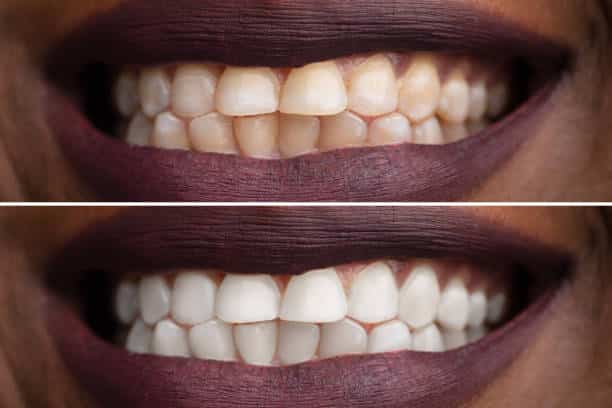
Picture this: you’re scrolling through your phone, and an ad pops up promising a dazzling white smile in just three days, using a charcoal powder, an LED light kit, or some mixture involving baking soda and lemon juice. The before-and-after photos look convincing. The price is tempting. And you find yourself wondering, could teeth whitening really be that simple?
If you’ve been down that road, you’re in good company. Teeth whitening is one of the most searched cosmetic dental topics in Kenya, and the internet is overflowing with tips, tricks, and products that promise dramatic results with minimal effort. Some of them are harmless. Others can cause real, lasting damage to your teeth.
At Nairobi Sterling Dental Clinic, teeth whitening is one of the most common cosmetic enquiries we receive. In this article, we want to give you an honest, clinically informed picture of what teeth whitening actually involves. We talk about what genuinely works, what doesn’t, and what you should realistically expect from professional treatment.

First, Why Do Teeth Discolour in the First Place?
Understanding what causes tooth discolouration helps explain why some whitening methods work and others fall short. Tooth discolouration falls into two broad categories:
Extrinsic staining
Extrinsic staining occurs on the outer surface of the enamel, which is the hard, protective outer layer of the tooth. This type of staining is caused by the foods and drinks we consume regularly. Coffee, tea, red wine, dark sodas, and foods rich in pigment all contribute to surface staining over time. Smoking is another significant cause of extrinsic discolouration, producing stubborn yellow and brown stains on the enamel surface.
Intrinsic discolouration
Intrinsic staining occurs within the tooth itself, in the dentine, the layer beneath the enamel. This type of discolouration can result from certain medications taken during tooth development (such as tetracycline antibiotics), excessive fluoride exposure during childhood, trauma to a tooth, or simply the natural ageing process, which causes the enamel to thin and the darker dentine beneath to show through more prominently.
This distinction matters because extrinsic staining generally responds well to whitening treatment, while intrinsic discolouration can be more complex to address and may require alternative cosmetic approaches such as veneers or bonding.
What Actually Works
Professional in-clinic teeth whitening.
This is the gold standard and for good reason. Professional whitening treatments use clinically approved bleaching agents, typically hydrogen peroxide or carbamide peroxide, at concentrations that are both effective and safe when applied under professional supervision. At Sterling Dental, we assess your teeth and gums thoroughly before recommending whitening treatment, ensuring you’re a suitable candidate and that the process is tailored to your specific situation.
In-clinic whitening delivers results that are noticeably more significant and longer-lasting than anything available over the counter. The procedure is carefully controlled, your gums are protected throughout, and your dentist monitors the process to ensure your comfort and safety.
Take-home whitening kits from your dentist.
These are custom-made trays fitted to your teeth, provided by your dentist along with a professional-grade whitening gel. They’re used at home over a period of days or weeks and produce excellent results — not as immediately dramatic as in-clinic treatment, but effective and safe when used as directed. The keyword here is custom — the trays are made specifically for your teeth, ensuring the gel is distributed evenly and doesn’t leak onto the gums.
Whitening toothpastes.
These can help maintain results after professional treatment and may reduce surface staining with regular use. However, they work through mild abrasion rather than bleaching, and their whitening effect is limited. They’re a useful maintenance tool, not a standalone solution.
What Doesn’t Work, Or Causes Harm
Charcoal toothpaste and powders.
This is one of the most popular DIY whitening trends on social media, and one of the most potentially damaging. Charcoal is highly abrasive. While it may remove some surface staining initially, repeated use gradually wears away the enamel. Once enamel is lost, it doesn’t grow back. Thinner enamel means the darker dentine beneath becomes more visible, ironically making teeth appear more yellow over time, not less. In our experience at Sterling Dental, we’ve seen patients who’ve used charcoal products long-term and are surprised to find their teeth are more sensitive and more discoloured than before they started.
Baking soda and lemon juice mixtures.
Another popular home remedy that does more harm than good. Baking soda is abrasive, and lemon juice is highly acidic. Together, they erode enamel rapidly. The temporary brightening effect they produce is the result of enamel removal, not safe whitening.
Over-the-counter whitening strips.
These vary considerably in quality and effectiveness. Most use lower concentrations of whitening agents than professional treatments, and because they’re not custom-fitted, uneven coverage and gum irritation are common. They may produce modest results for mild extrinsic staining, but they’re not suitable for everyone and should be approached with caution.
LED whitening kits purchased online.
These kits, often heavily marketed on social media, typically combine a low-concentration whitening gel with a blue LED light. The light itself has not been shown to meaningfully accelerate whitening in most clinical studies. Results are generally modest at best, and the kits carry the same risks as other non-professional products — uneven application, gum irritation, and potential enamel sensitivity.
Who Is, and Isn’t a Good Candidate for Whitening?
Professional teeth whitening is safe and effective for most adults, but it isn’t suitable for everyone. In our clinical experience, whitening works best for patients with healthy teeth and gums who have extrinsic staining or mild to moderate general discolouration.
Whitening may not be recommended, or may require additional consideration, in the following cases:
- Sensitive teeth or gums. Whitening can temporarily increase sensitivity. We’ll assess this carefully and may recommend a desensitising protocol before treatment.
- Existing dental restorations. Crowns, veneers, bridges, and tooth-coloured fillings do not respond to whitening agents. If you have restorations on visible teeth, whitening may create an uneven appearance. This is an important discussion to have with your dentist before proceeding.
- Severe intrinsic discolouration. As mentioned earlier, discolouration that originates within the tooth may not respond adequately to bleaching. Alternative cosmetic options may be more appropriate.
- Pregnant or breastfeeding patients. As a precaution, we advise against whitening treatment during pregnancy and breastfeeding.
- Children and teenagers. Whitening is generally not recommended for patients under 18, as the teeth and their nerves are still developing.
This is precisely why a professional assessment before any whitening treatment is so important. What works well for one person may not be appropriate for another.

What to Expect From Professional Whitening at Sterling Dental
Here’s a straightforward walkthrough of what the process looks like at our clinic:
Initial consultation.
Before any whitening begins, our dentist will examine your teeth and gums, discuss your goals, and determine whether you’re a suitable candidate. If there are any underlying issues, such as cavities or gum disease, these will need to be addressed first. Whitening on unhealthy teeth is not advisable and can worsen existing problems.
The whitening procedure.
Your gums and soft tissues are carefully protected before the whitening agent is applied to the teeth. The gel is left on for a specified period, and the process may be repeated in cycles within the same appointment to achieve the desired result. The procedure is comfortable for most patients, though some may experience mild sensitivity during or shortly after treatment.
Aftercare advice.
Following whitening treatment, we’ll provide specific guidance on what to eat and drink in the first 48 hours. This is when the teeth are most porous and most susceptible to staining. We’ll also advise on how to maintain your results over time.
Results and longevity.
Professional whitening can lighten teeth by several shades, with results typically lasting between one and three years depending on lifestyle factors — particularly diet and smoking. Touch-up treatments can extend and refresh results over time.
How To Maintain Your Results
The longevity of your whitening results depends largely on the choices you make afterwards. Here are the most effective ways to keep your smile bright:
- Rinse your mouth with water after consuming staining drinks like coffee, tea, or dark sodas
- Use a straw for cold-staining beverages where possible
- Brush twice daily with a whitening or fluoride toothpaste
- Attend regular professional cleanings with your dentist. Removing surface staining before it builds up makes a significant difference
- Avoid smoking, which is one of the fastest ways to reverse whitening results.
- Consider periodic touch-up treatments as advised by your dentist
When Should You See a Dentist About Teeth Whitening?
Book a consultation at Sterling Dental if:
- You’re unhappy with the colour of your teeth and want to explore your options
- You’ve tried over-the-counter products without satisfactory results
- You have sensitive teeth and want to know whether whitening is safe for you
- You have existing dental restorations and want to understand how whitening might affect your overall smile appearance
- You’d want a safe, professionally supervised treatment with predictable, lasting results
It’s worth noting that whitening is a cosmetic procedure. It won’t strengthen teeth or address underlying dental health issues. A healthy mouth is always the foundation. If there are any outstanding dental concerns, we’ll address those first before discussing cosmetic options.
About Nairobi Sterling Dental Clinic
Nairobi Sterling Dental Clinic is a modern, full-service dental practice located on the 6th Floor, Park Suites, Parklands, Nairobi. Led by Dr Raj and a team of experienced dental professionals registered with the Kenya Medical Practitioners and Dentists Council (KMPDC), we offer a comprehensive range of dental services. From routine checkups and professional cleanings to orthodontics, restorative care, and cosmetic treatments, including teeth whitening.
Take Away.
If you’re considering teeth whitening and want to know whether it’s the right option for you, the best place to start is a consultation with a qualified dentist who can assess your teeth honestly and recommend the most suitable approach for your specific situation. At Nairobi Sterling Dental Clinic, our teeth whitening treatments are carried out by experienced, KMPDC-registered dental professionals in a safe, comfortable environment. The results are tailored to you, not a one-size-fits-all solution. We’d love to help you achieve a smile you feel genuinely confident about. Give us a call on +254 762 223 925 or visit us at the 6th Floor, Park Suites, Parklands, Nairobi, for your consultation today.