

It starts as a dull ache, the kind you notice when you bite down on something, or when a cold drink hits a particular tooth. You tell yourself it’ll pass. Maybe you take a painkiller, avoid chewing on that side, and carry on with your day. A week later it’s still there, perhaps a little worse. Two weeks later, you’re waking up at night, with throbbing sensation and unimaginable pain.
This is one of the most common stories we hear at Nairobi Sterling Dental Clinic. And almost every time, the patient ends up saying the same thing: “I wish I’d come in sooner.”
Root canal treatment has an undeserved reputation for being something to fear. However, the truth is, it’s the infection causing the pain that’s the real problem, not the treatment that fixes it. The sooner the signs are recognised and acted upon, the simpler, more comfortable, and more successful the outcome tends to be. This article is designed to help you recognise those signs early, before the situation becomes more urgent than it needs to be.
What Is a Root Canal, and Why Might You Need One?
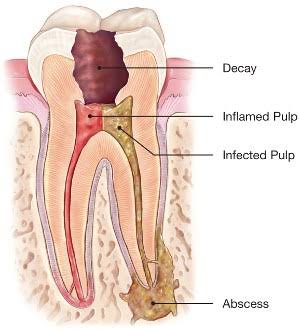
Inside every tooth, beneath the hard outer enamel and the layer of dentine beneath it, lies a soft inner chamber called the pulp. The pulp contains nerves, blood vessels, and connective tissue. It’s what keeps the tooth alive and sensitive to temperature and pressure.
When bacteria reach the pulp, typically through a deep cavity, a crack in the tooth, or a failed filling, the pulp becomes infected or inflamed. Left untreated, this infection spreads, causes significant pain, and can eventually lead to an abscess, bone loss, or the loss of the tooth entirely. Root canal treatment removes the infected pulp, cleans and seals the inner canals, and saves the tooth. It is not the cause of pain but the solution to it.
The Warning Signs to Watch For
The signs that a root canal may be needed are not always dramatic, and some are subtle enough to be easily dismissed or misattributed. Here is what to look out for:
1. Persistent or Severe Toothache
A toothache that lingers, particularly one that throbs, worsens at night, or intensifies when you bite down or apply pressure, is one of the clearest signals that something is wrong inside the tooth. Unlike the brief, sharp discomfort of a sensitive tooth, the pain associated with pulp infection tends to be deeper, more persistent, and harder to ignore over time.
It’s important to note that pain levels vary significantly from person to person and from case to case. Some patients describe an almost unbearable toothache; others experience a dull, persistent ache that they’ve been managing with painkillers for weeks. Both warrant urgent dental attention.
2. Prolonged Sensitivity to Hot or Cold
Some degree of tooth sensitivity is common and often manageable. What raises a red flag is sensitivity that lingers long after the source has been removed. If you drink something cold or hot and the discomfort persists for more than a few minutes after the drink is gone, this suggests the nerve inside the tooth may be damaged or infected.
In our experience at Sterling Dental, patients often describe this as a “lingering zing” that doesn’t settle the way normal sensitivity does. This is a symptom worth taking seriously, particularly if it’s getting worse over time rather than better.
3. A Darkening or Discoloured Tooth
A tooth that has become noticeably darker than the teeth around it, taking on a prey, brown, or yellow tinge, may be a sign that the pulp inside is dying or has already died. This discolouration occurs because the internal tissue is breaking down and the byproducts are leaching into the dentine of the tooth.
This sign is particularly easy to overlook because it’s painless. A dying nerve means the tooth gradually loses its sensitivity, which can misleadingly feel like the problem has resolved, when in fact the infection is still present and progressing.
4. Swelling or Tenderness in the Gums
Swelling, puffiness, or tenderness in the gum tissue around a specific tooth is a sign that infection is spreading beyond the tooth itself and into the surrounding tissue. This swelling may affect a small raised area near the base of the tooth, or be more diffuse, affecting a broader area of the gum.
A small pimple-like bump on the gum called a dental abscess is a particularly telling sign. This bump is the body’s way of draining the infection, and while it may come and go, its presence indicates an active infection that needs prompt professional attention.
5. A Persistent or Recurring Bad Taste in the Mouth
If you notice a persistent bad taste, particularly one that seems to come from a specific area of the mouth, it may be caused by an abscess draining into the oral cavity. This is often accompanied by bad breath that doesn’t improve with brushing or mouthwash. While bad breath has many possible causes, a localised bad taste near a specific tooth is worth investigating promptly.
6. A Chipped, Cracked, or Broken Tooth
Not every chipped or cracked tooth requires a root canal. However, a crack or fracture that extends into the pulp chamber creates a direct pathway for bacteria to enter and infect the inner tissue. If you’ve experienced trauma to a tooth and subsequently develop any of the symptoms listed above, root canal infection should be considered.
7. Pain That Radiates to the Jaw, Ear, or Head
Dental pain doesn’t always stay neatly localised to the affected tooth. Infection and nerve involvement can cause discomfort that radiates to the jaw, the ear, the temple, or even the neck. This can sometimes lead patients to suspect an ear infection or a tension headache, when the true source is a tooth in distress.
If you’re experiencing jaw or facial pain alongside any dental symptoms, a dental assessment is an important first step in identifying the cause.

Why You Shouldn’t Wait
We understand the temptation to hold off. The pain might ease slightly with painkillers. Life is busy. The thought of dental treatment feels daunting. But delaying treatment when a root canal is needed almost always makes things worse, in several important ways.
1. The infection spreads.
A dental infection does not resolve on its own. Without treatment, bacteria continue to multiply and spread, first through the root canals, then into the surrounding bone and tissue. What begins as a contained infection inside one tooth can develop into a dental abscess, bone loss, or, in serious cases, a spreading infection that affects a broader area of the face and jaw.
2. The tooth becomes harder to save.
The sooner root canal treatment is performed, the better the chances of saving the natural tooth. The longer treatment is delayed, the more the internal structure of the tooth deteriorates, and the more complex and costly the procedure becomes. In some cases, delay means the tooth can no longer be saved at all and must be extracted.
3. Pain escalates.
A toothache that is manageable today can become severely debilitating within days. Dental infections can worsen rapidly, and the pain associated with an advanced abscess is significantly more intense than the early warning signs that preceded it.
4. Treatment becomes more involved.
Early-stage root canal treatment is a relatively straightforward procedure. Advanced infection may require additional steps, including antibiotics, drainage of an abscess, or more complex canal work. This adds time, cost, and complexity to what could have been a simpler intervention.
In our experience at Sterling Dental, the patients who come in at the first sign of trouble have consistently better outcomes. They get less discomfort, simpler treatment, and a higher likelihood of saving the tooth long-term.
When Should You See a Dentist?
Book an appointment at Sterling Dental as soon as possible if you experience:
- A toothache that persists for more than a day or two
- Sensitivity to hot or cold that lingers after the source is removed
- A tooth that has darkened or changed colour
- Swelling, tenderness, or a bump on the gum near a tooth
- A persistent bad taste or bad breath coming from a specific area
- Pain that radiates to the jaw, ear, or head
- A tooth that has been cracked, chipped, or previously injured
- Any combination of the above, even if the pain is mild
If you are in severe pain or have significant swelling, please contact us immediately. We prioritise urgent dental cases and will do our best to see you as soon as possible.
Takeaway Notes.
Dental pain is your mouth’s way of asking for help, and it’s a signal worth responding to promptly. At Nairobi Sterling Dental Clinic, root canal treatment is performed by experienced, KMPDC-registered dental professionals using modern techniques and equipment, with your comfort as our priority throughout.
If you’ve been experiencing any of the symptoms described here, even mild ones, we’d encourage you not to wait. The sooner you come in, the more we can do, and the better the outcome is likely to be. Call us on 0762 223 925, visit our clinic on the 6th Floor, Park Suites, Parklands, Nairobi, or book your appointment to see our specialists. We’re here when you need us.